"I know what a space can do to a day. And I know what a day can do to a life."
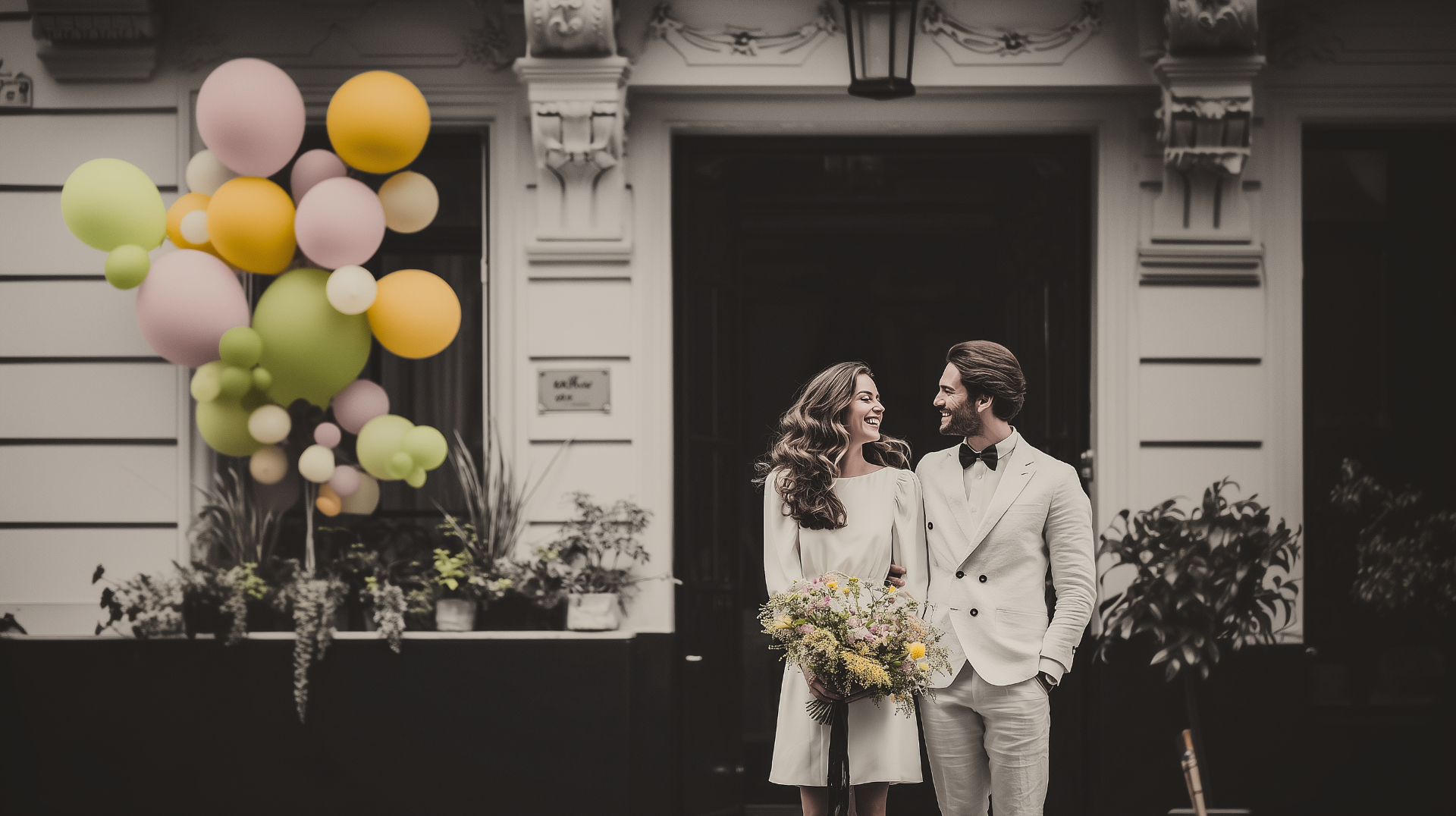
There were two parts to my wedding day, and I knew it from the start. The ceremony, in the city, with the people I loved. Then a celebration I had not chosen, in a place I did not want to be, far enough away that many of the people I loved could not follow.
When the first part ended, my father held my hand and looked at me for a long moment, the kind of look that needs no words, because words would only have made it worse. He knew. I knew. There was nothing to do but go.
Standing there, I understood something I could not yet name: the day was no longer mine.
Not because what followed was a catastrophe. It wasn't. It was the quieter thing: someone else's wishes had taken the day over, gently and completely.
I was young, and I had trusted the wrong people to hold the vision I had for that day. The wedding I had imagined, everyone I loved in one place, in a setting that felt like mine, never happened. For years I carried it, not as anger, but as a quiet sense of something lost.
That is where this work was born.
I grew up between languages and countries, Moldova, Romania, Canada, France, and I learned early to read a new place, to find its codes and the invisible layers. I trained as an interior designer, and I taught my eye how a space works: how light moves through a room at different hours, how a ceiling changes the feeling of an evening, how the scent of a courtyard after rain becomes the thing a guest still remembers ten years on.
None of that was what I needed most on my own wedding day. What I needed was someone who could see what I could not yet see, someone who would look at the plan and say: this is going to cost you something, let me talk you through it. No one did. That is the work I do now.
When I walk into a venue, I do not look at it the way you look at a photograph. I stand in it. I read how people will move through it, how the light will fall at seven in the evening, where a mother who does not speak the language can sit quietly for five minutes before the ceremony. I look at everyone who will live inside the day, not only the couple at its centre.
And when I sit across from a bride, I bring something no training can give: I know what it feels like when the day, and the life, is no longer yours. I know the weight of walking through a door you did not choose.
I do not tell brides what I see, not directly. I am not here to rewrite your story or to stand between you and your choices. I give you the language. I ask the questions that bring what is hidden to the surface. What you do with it stays yours.
Lemon & Hazel is the atelier I built around that conviction. I read the venues and shape the ceremonies; I carry the planning, the budget, and the coordination myself, so that the whole of it holds.
It is why Lemon & Hazel exists: so that no woman has to carry what I carried. Not the drama of a ruined wedding, the quieter thing: the sense of an occasion lost, a day that should have been hers and was not.
I plan for the woman who arrives from somewhere else, who knows what she wants and needs someone who will fight to keep it that way.