Wine estate, full exclusivity · Saint-Martin-du-Bois — Bordeaux
Luneray, Seine-Maritime — Alabaster Coast, Normandy
Venue N° 04 — The Collection
Most couples choose a château and then look for things to do nearby. At Ronchay it works the other way round.
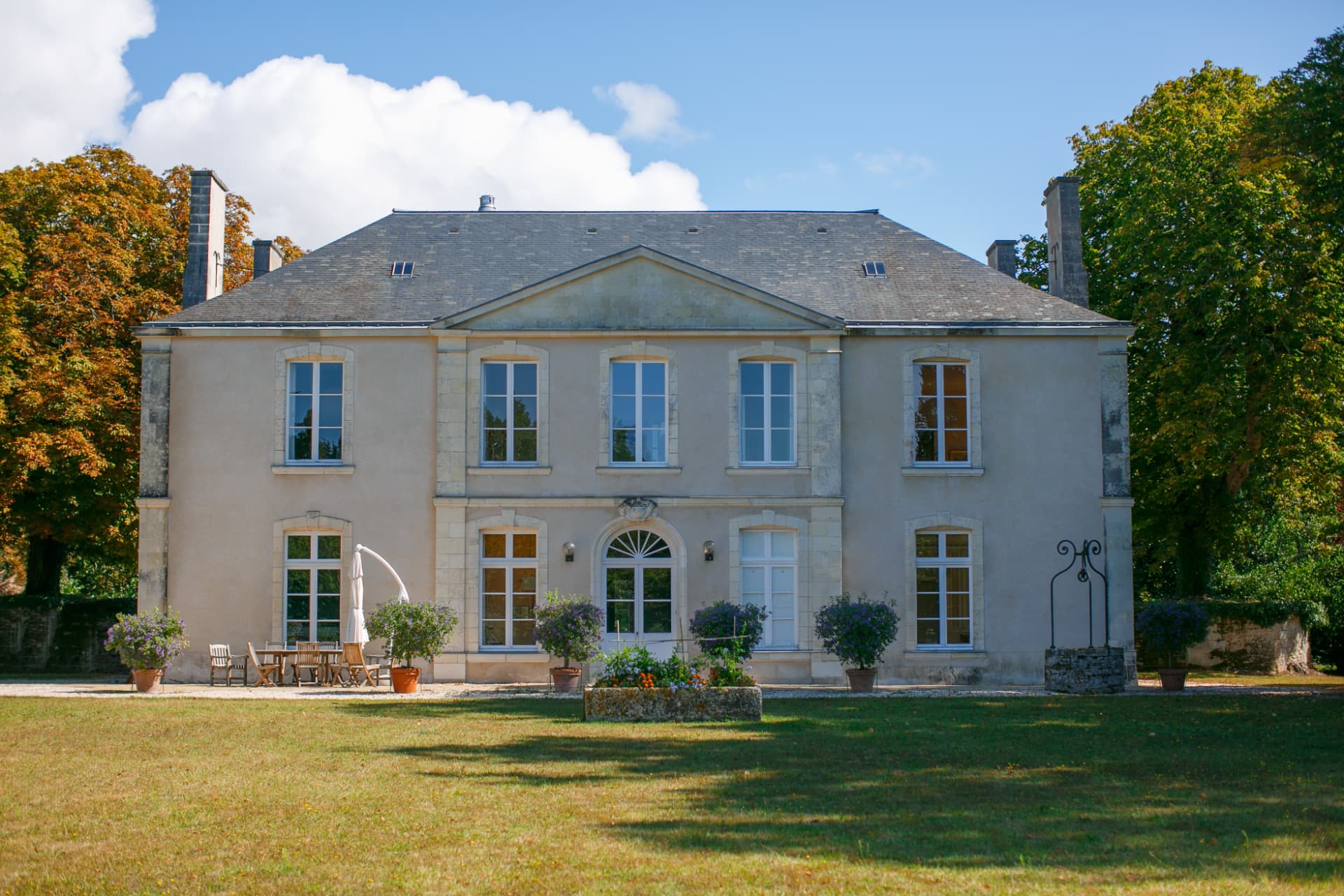
The house is a Napoleon III family home, built in 1860, in a village that made cloth. It sleeps thirty-five and seats fifty at dinner. It is not a grand estate and it does not pretend to be one. What it gives you instead is a base in a working corner of Normandy, and a week in which your family can actually go and find something.
For the right couple that is the better trade. For most couples it is not, and this page is written for the first kind.
The place
Luneray made cloth. For generations its weavers worked looms in their own cottages, producing siamoise, a striped cotton and linen the whole Pays de Caux was known for. The quarter where they lived is called le Ronchay, and the street names still say so.
The château was built in 1860, on that money, in that quarter, and took its name from it.
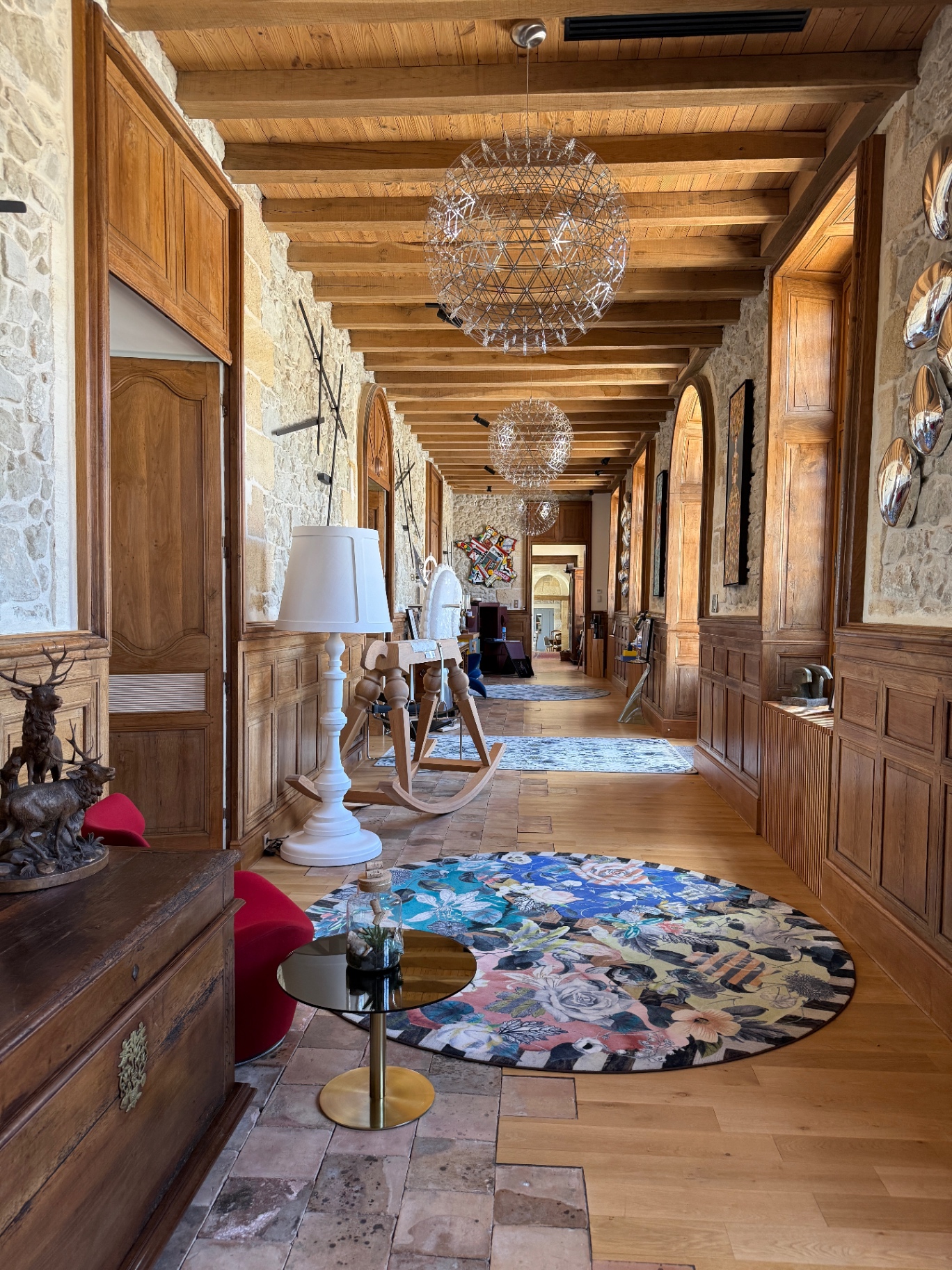
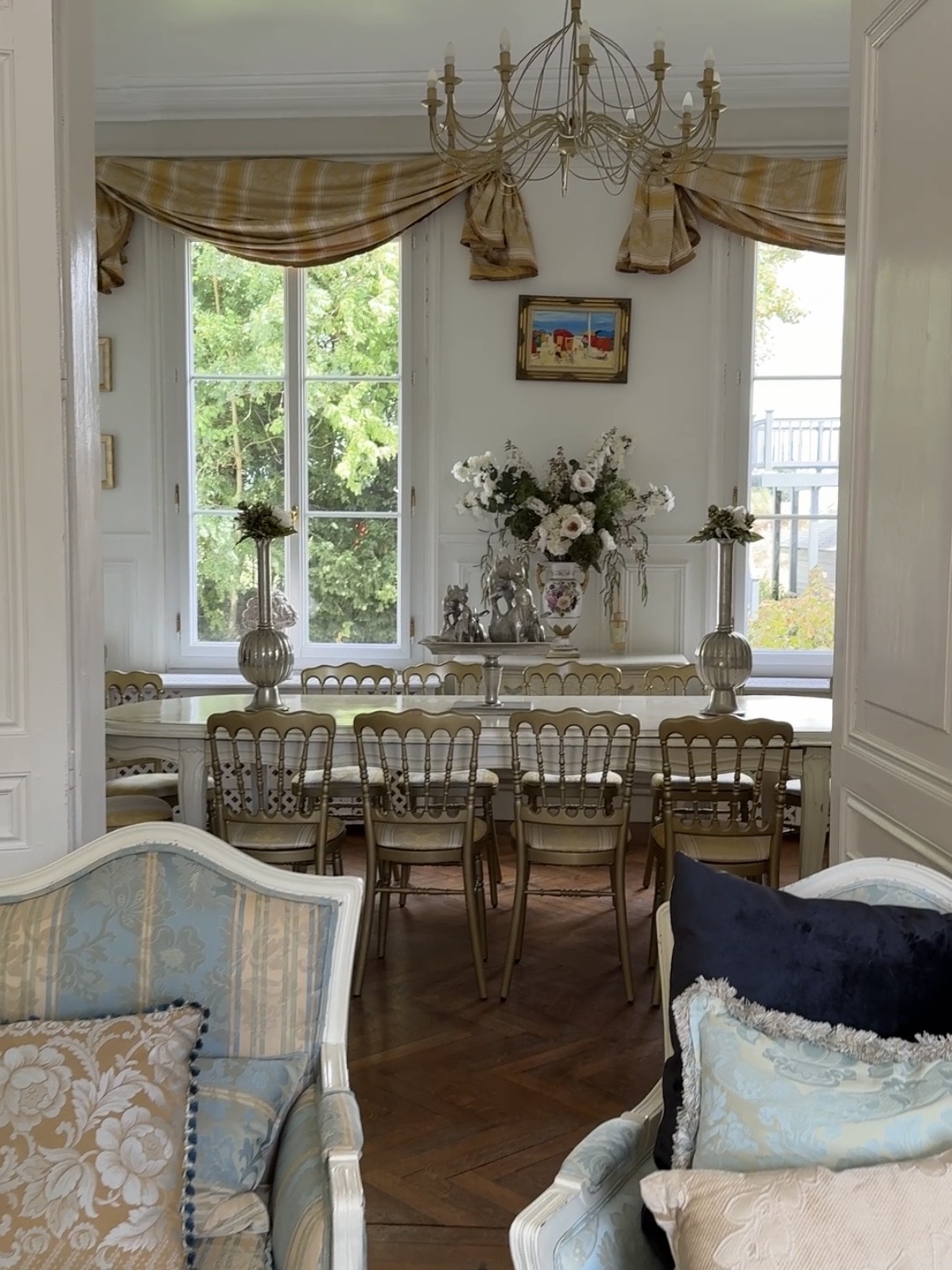
It is a family house and it still behaves like one. Myriam lives on the estate, and she has decorated it in her own taste without holding back: rich fabrics, gilded mirrors, tables laid and ready, cushions in abundance. It is a dressed house rather than a restrained one, and that is a decision rather than an accident. The park is five thousand square metres of garden rather than an avenue of limes. The scale is domestic, deliberately.
This is working countryside. The village is ringed with farms and the château has one for a neighbour. In June the fields turn pale blue, because the Pays de Caux grows more flax than anywhere on earth and the flowers open at dawn and are gone by the afternoon.
The house and the estate
The wedding here
Build the week first, then the day.
The estate goes on its own for two nights, three, four or seven. Three is the one most couples take.
Myriam runs a reduced rate for weddings from Monday to Thursday, and another for winter. Guests who have flown from America have already taken the week off, so the day of the week matters far less here than it would at home. A Tuesday in October, with the whole estate to yourselves, is the best-value wedding in The Collection.
Thursday or Friday, people arrive and settle. Thirty-five sleep on the estate, across the château and two pavilions twenty-five metres away. A cottage a hundred and fifty metres down the lane takes ten more. Five gîtes nearby sleep around sixty, and there are guest houses within ten kilometres. A wedding here does not need everyone under one roof, and planning it that way is how it works best. Where people sleep is a conversation rather than a plan you are handed. You tell me who needs quiet, who should be near the children, and who will not manage stairs, and the rooms are arranged around that.
The house opens for setting up from five o’clock the day before.
The day itself. Fifty seated indoors. Above that, a barnum stands in the garden and takes up to a hundred and thirty. An orangery is being built for larger receptions and is confirmed for 2027. Until it opens, the house and the garden are the answer.
The caterer is yours to choose. Nothing is imposed, there is a kitchen for them on site, you may bring your own wine and your own cake, and no one takes a cut of either. For a wedding where the food runs across four or five meals instead of one, that freedom is worth more than any single room.
Preparation rooms for both parties, the boudoir Virginie and the salon Clovis. Parking for seventy.
One honest note on the evening. The estate sits inside the village, so the night has a civilised end to it rather than running to four. If a long night is the part of the wedding you care about most, this is the wrong house, and I would rather say so now.
The estate
Venue hire €8,000 for three nights, €12,000 for a full week, exclusive use of the whole estate
Orangery €2,500. Parking €175. Fifty per cent on booking, balance twenty-one days before arrival.
Planning and coordination for the week from €6,378
"Ronchay suits a wedding of thirty to fifty people who are coming for the week. It is not the right house for eighty, and it is not the right house for anyone who wants to arrive up a long drive."
The region
The mill is still running. Tissage du Ronchay was founded in 1845 by a man who gathered the cottage weavers under one roof. Six generations later it is still a family business, still in Luneray, with around forty looms. In 2020, with the French textile industry collapsing and no one to take it on, the family came close to closing. A daughter left her teaching job, joined her father and uncle, and that autumn they wove linen again for the first time in over a decade, from flax grown in the fields around the village.
You can book a visit and watch it. It is a two-minute walk from the gate.
The temple. Luneray’s Protestant church was begun in 1807 and inaugurated in 1812, and it is one of the most important rural Protestant churches in Normandy. The congregation is far older than the building. If your family name crossed to America in the seventeenth or eighteenth century, there is a reasonable chance it left a village much like this one, and the people who stayed built this.
The square. The old grain hall is now the mairie. Walk out from it along the sentes à paniers, the grass paths the weavers used to carry cloth to market, and you have seen the whole of the village’s working life in forty minutes.
Veules-les-Roses, twenty minutes. The only village in Seine-Maritime classified among the Plus Beaux Villages de France. The Veules is the shortest river in France, a little over a kilometre from source to sea, and it runs through the middle of the village past watercress beds and old mills. You can walk its entire length before lunch.
Le Bois des Moutiers, twenty-five minutes, at Varengeville. The house was designed by Edwin Lutyens in 1898 and the gardens by Gertrude Jekyll, one of very few of their collaborations anywhere outside England. The Mallet family still lives there and the interior is still Belle Époque. Twelve hectares, open April to November. Rhododendrons in May, blue hydrangeas through the summer, and the whole park turning in September. Allow two hours, and take tea above the park.
Jardin Vasterival, next door. Eight hectares running down towards the sea, created by Princess Sturdza, and quieter and more private than anything else on this coast. It opens only a handful of days a year, or by appointment for groups, which is worth asking about well before you come.
Étretat, an hour and a quarter. The white arches and the needle that Monet painted over and over. It is the furthest thing on this list and the only one that needs a proper day. Leave early, walk the cliff path before the coaches arrive, and be back for dinner.
A note from Lemon & Hazel
Myriam runs this estate on her own. She has turned her house into a wedding venue by herself and put a great deal of herself into it.
It is a country house near the Normandy coast, reached by a winding drive through the valleys, with lush land and farms on every side.
She has decorated it to her own taste. The interior is an attempt to translate the richness of the region and its outdoors into a similarly rich, maximalist, baroque style that touches all the senses: touch, smell and sight.
Ronchay is the only house in The Collection where I would tell you to plan the week before you plan the day. Everything that makes it worth the journey is within half an hour of the gate, and the house is where you come back to at the end of it.
Couples who want bare stone and undyed linen will be happier elsewhere. Couples who like a house that has been fussed over will be very happy here.
Planning and coordination for the week is €6,378, the same as anywhere else in The Collection. The fee has a floor because the work has one. A wedding of thirty-five people across three buildings and a village, with a caterer tendered from nothing and a week to build, is not less work than eighty guests on one lawn. It is frequently more.
At a house where nothing is imposed, the caterer is chosen rather than inherited. Across four meals for forty people, the difference between the right quote and the first one is most of what this fee costs.
Tell me who is coming and what you want the week to feel like.
Other maisons in The Collection